Creepy Dwelling Delhi
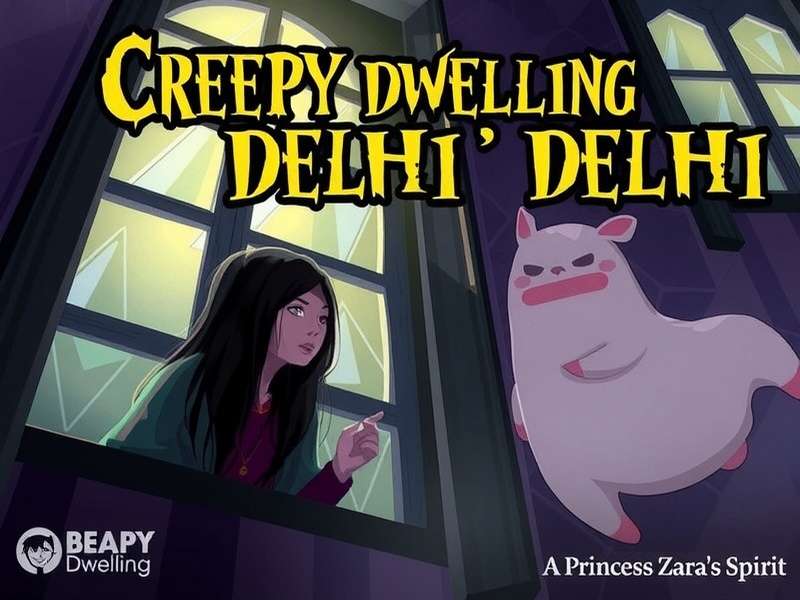
Official cover art of Creepy Dwelling Delhi, showcasing protagonist Riya Mehra navigating the haunted lanes of Old Delhi’s Chandni Chowk 🎮👻
Introduction
Creepy Dwelling Delhi is a landmark indie survival horror game that emerged from India’s burgeoning gaming scene in 2023, captivating players with its authentic desi horror experience and deep connection to Delhi’s cultural and historical tapestry. Developed by Delhi Indie Studios—a trio of passionate gamers from the National Capital Region (NCR)—and published in partnership with Daman Games, the title breaks free from Western horror tropes to deliver a spine-chilling adventure rooted in Indian folklore, urban legends, and the chaotic charm of Old Delhi.
Unlike mainstream horror games that rely on vampires, zombies, or haunted mansions, Creepy Dwelling Delhi draws its scares from elements that resonate deeply with desi audiences: haunted chawls (tenement buildings) with creaky staircases, tantriks (occult practitioners) wielding dark magic, spirits tied to historical events like the 1857 Indian Rebellion, and the eerie silence that falls over Chandni Chowk’s bustling markets after midnight. The game’s tagline—“Where Delhi’s Past Haunts Its Present”—encapsulates its core premise: a journey through time, where the ghosts of Old Delhi’s Mughal emperors, British colonizers, and ordinary citizens collide with the modern world.
Set in the labyrinthine lanes of Chandni Chowk, Jama Masjid, and Red Fort, Creepy Dwelling Delhi follows Riya Mehra, a feisty Delhi journalist, as she investigates the disappearance of her childhood friend Aisha. What begins as a simple missing-person case soon unravels into a centuries-old mystery involving a cursed Mughal princess, a power-hungry tantrik, and a sacrifice that could alter the fate of Delhi itself. The game’s blend of stealth mechanics, puzzle-solving, and psychological horror has earned it critical acclaim, with many reviewers hailing it as “the first truly desi horror game that gets it right.”
Beyond its scares, Creepy Dwelling Delhi is a love letter to Delhi—India’s capital and a city of contrasts. It celebrates the city’s multiculturalism, from the Hindu puja rooms in chawls to the Mughal-era architecture of Jama Masjid, and the Sikh gurdwaras that dot the landscape. The game’s audio design captures the essence of Delhi: the honking of auto-rickshaws during the day, the call to prayer from nearby mosques, the chatter of street vendors selling golgappas and samosas, and the eerie silence of empty lanes at night. For many Indian players, the game feels less like a work of fiction and more like a journey through the haunted corners of a city they know and love.
Development
Conceptualization: From Idea to Vision
The story of Creepy Dwelling Delhi began in 2020, during the height of the COVID-19 lockdown, when three childhood friends—Arjun Verma (lead developer), Priya Sharma (art director), and Rajat Mehta (gameplay designer)—found themselves stuck at home in East Delhi, reminiscing about their college days spent exploring Old Delhi’s lanes. “We’d often skip classes to wander Chandni Chowk, listening to old men tell stories of haunted chawls and tantriks,” recalls Arjun. “During lockdown, we started talking about how there were no horror games that felt ‘desi’—most were just copies of Western titles. We wanted to create something that felt like our own, something that Indian gamers could relate to.”
Conceptualization took six months, with the team diving deep into Delhi’s history and folklore. They spent hours researching Mughal-era texts, interviewing local historians, and collecting urban legends from residents of Old Delhi. One story, in particular, caught their attention: the tale of Princess Zara, a Mughal princess who fell in love with a commoner and was cursed by a tantrik hired by her father. “The story had everything we needed—romance, betrayal, curses, and a connection to Delhi’s past,” says Priya. “We knew right away that Zara’s spirit would be the heart of our game.”
The team also wanted to highlight Delhi’s multiculturalism, so they wove elements from Hindu, Muslim, Sikh, and Christian traditions into the game. For example, one puzzle involves arranging puja items (diya, flowers, prasad) in a Hindu chawl, while another requires decoding a Mughal-era script using a Quran and a Hindi-Urdu dictionary. “Delhi isn’t just one culture—it’s a melting pot,” explains Rajat. “We wanted the game to reflect that, so players from all backgrounds would see themselves in it.”
Funding: The Struggles of an Indie Desi Studio
As first-time indie developers, Delhi Indie Studios faced significant funding challenges. With no backing from major publishers—who were skeptical about the viability of a desi horror game—the team turned to crowdfunding on Indian platforms like Ketto and Milaap. Their campaign, launched in January 2021, set a target of ₹25 lakhs (approximately $30,000) to cover development costs, including software licenses, asset creation, and voice acting.
The campaign resonated with Indian gamers, who were eager to see a homegrown horror title. Within a month, the team had raised ₹15 lakhs, thanks to over 3,000 backers—mostly college students and young professionals from Delhi NCR, Mumbai, and Bangalore. “It was overwhelming,” says Arjun. “We had people donating ₹500 and leaving comments like ‘Make us proud’ or ‘Finally, a game that feels like India.’ It gave us the motivation to keep going.”
To reach their target, the team also secured a ₹10 lakh grant from the Ministry of Electronics and IT’s Digital India initiative, which supports indie game developers and digital content creators. “The grant was a game-changer,” says Priya. “It allowed us to hire more voice actors and invest in better quality assets, which made the game feel more polished.”
Team & Local Talent: Keeping It Desi
Delhi Indie Studios made a conscious decision to hire local talent, from voice actors to artists, to ensure the game’s authenticity. “We didn’t want to bring in Western voice actors or use generic assets,” explains Rajat. “We wanted everything to feel like it came from Delhi—from the way characters speak to the way the chawls look.”
The voice cast includes Shruti Pathak, a Delhi-based theatre actor who voices protagonist Riya Mehra. Shruti, who grew up in a chawl in East Delhi, brought personal experience to the role. “Riya is a typical Delhi girl—feisty, curious, and unafraid to speak her mind,” says Shruti. “I drew on my own experiences growing up in Delhi to make her feel real. For example, when Riya gets frustrated, she uses phrases like ‘yaar, ye kya hai?’ (dude, what is this?)—things we actually say in Delhi.”
Manoj Bajpayee, a veteran stage actor from Delhi’s National School of Drama, lends his voice to the antagonist, Tantrik Raghav. “Raghav isn’t a one-dimensional villain,” says Manoj. “He’s driven by greed and a desire to prove himself, which makes him scarier. I used a deep, gravelly voice with hints of Urdu to give him an air of authority and menace.”
The art team, led by Priya Sharma, spent months photographing Old Delhi’s chawls, markets, and historical buildings to create authentic 3D models. “We’d wake up at 5 AM to avoid the crowds and take photos of Chandni Chowk’s lanes,” says Priya. “We wanted every detail to be perfect—from the street vendors’ carts to the puja rooms in the chawls. We even hired a local craftsman to create traditional Indian furniture, which we then scanned into the game.”
Technology & Optimization: Accessibility for Desi Gamers
For development, the team chose Unity Engine, a popular choice among indie developers due to its flexibility and affordability. They also used desi asset packs created by Indian developers, which included 3D models of traditional Indian clothing, furniture, and street items. “Using desi asset packs saved us time and ensured the game’s visual style was authentic,” explains Arjun. “We didn’t want to use Western asset packs that would make the chawls look like apartments in New York or London.”
One of the team’s biggest priorities was optimizing the game for low-end PCs and mobile devices—a crucial decision given that many Indian gamers use budget hardware. “In India, not everyone has a high-end gaming rig,” says Rajat. “We wanted Creepy Dwelling Delhi to be accessible to as many people as possible, whether they’re playing on a ₹20,000 laptop or a mid-range smartphone.”
To achieve this, the team implemented several optimizations: adjustable graphics settings (low, medium, high, ultra), reduced polygon counts for mobile, and compressed textures. They also tested the game on a range of devices, from budget Android phones to high-end PCs, to ensure smooth performance. “We spent months tweaking the game to run on low-end devices,” says Arjun. “For example, on mobile, we reduced the number of NPCs (non-playable characters) in crowded areas and simplified the lighting effects. The result is a game that looks great on all devices without sacrificing gameplay.”
Beta Testing & Feedback: Listening to Desi Gamers
Beta testing began in early 2023, with over 10,000 players across India participating. The team organized beta testing events in Delhi University colleges, Mumbai’s IIT, Bangalore’s RV College of Engineering, and Hyderabad’s IIIT, where players could try the game and provide feedback. “We wanted to get feedback from real Indian gamers, not just critics,” says Priya. “Their input helped us make the game better.”
Common feedback included requests for more Hindi language options, easier controls for mobile, and more puzzles based on desi rituals. The team incorporated these suggestions, adding full Hindi voice acting (in addition to English), touch-optimized controls for mobile, and three new puzzles inspired by Diwali and Holi. “One player suggested adding a puzzle where you have to light diyas in a specific order during Diwali,” recalls Rajat. “We loved the idea, so we added it to the game. It’s now one of the most popular puzzles among players.”
Other feedback focused on the game’s difficulty. Some players found the stealth sections too hard, while others wanted more challenging puzzles. The team balanced the difficulty by adding a “desi mode” (easier difficulty with more hints) and a “tantrik mode” (harder difficulty with fewer resources). “We wanted to cater to both casual players and hardcore horror fans,” explains Arjun. “Desi mode is perfect for players who want to enjoy the story without too much stress, while tantrik mode is for those who want a true survival horror experience.”
Gameplay of Creepy Dwelling Delhi
Creepy Dwelling Delhi blends survival horror, stealth, and puzzle-solving to create an immersive experience that feels both familiar and fresh. The game’s core mechanics are designed to make players feel vulnerable, like a real person stuck in a dangerous situation, while its puzzles and environmental design draw on desi culture to keep the experience authentic. Whether you’re hiding from a vengeful spirit in a chawl’s puja room or solving a puzzle based on Mughal-era script, Creepy Dwelling Delhi’s gameplay is deeply rooted in its setting and themes.
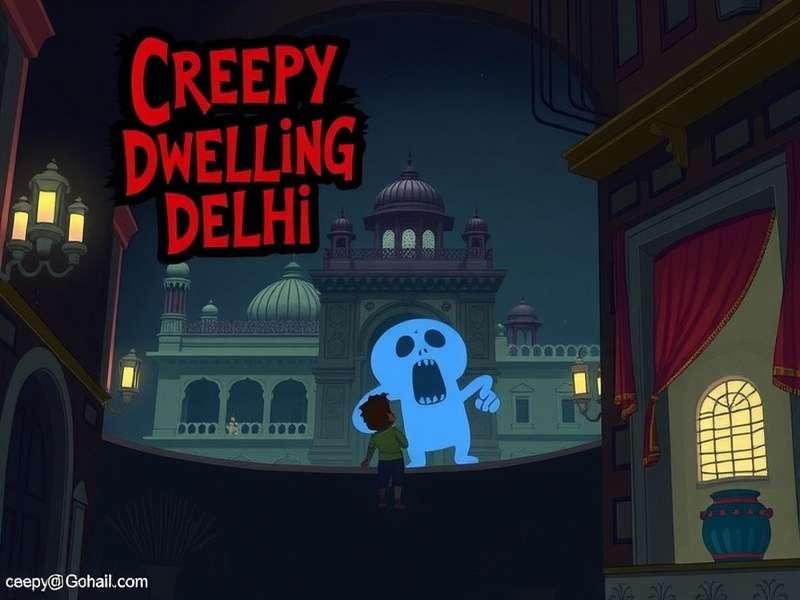
Gameplay snapshot of Creepy Dwelling Delhi, with Riya hiding from a spirit in a Chandni Chowk chawl 🕵️♀️👻
Core Mechanics: Stealth & Survival
At its heart, Creepy Dwelling Delhi is a stealth-based survival horror game. Players control Riya Mehra from a third-person perspective, which allows them to see Riya and her surroundings clearly—essential for avoiding detection. Movement is smooth and intuitive, with controls optimized for both keyboard/mouse (PC) and touch (mobile). Players can run, crouch, hide in cabinets or behind barrels, and interact with objects in the environment.
Unlike many Western horror games, which rely on combat, Creepy Dwelling Delhi emphasizes evasion. “We wanted to make the player feel like a regular person, not a superhero,” says Rajat Mehta, gameplay designer. “Riya is a journalist, not a soldier—she can’t fight spirits or tantriks head-on. Her best weapon is her wits.” To survive, players must stay in shadows, move slowly when enemies are nearby, and use distractions to lure them away.
A key feature of the game is the “fear meter,” which appears at the top of the screen. If Riya is in a dark area or near a spirit for too long, her fear level rises, making her movements slower and more erratic. To reduce fear, players can find puja rooms in chawls, where lighting a diya (oil lamp) or offering flowers to a deity will calm Riya down. “The fear meter adds a layer of tension,” explains Rajat. “It’s not just about avoiding enemies—it’s about managing your own fear.”
Survival Elements: Scavenging & Resource Management
Resources are scarce in Creepy Dwelling Delhi, and players must scavenge for items to survive. The game’s inventory system is limited—players can carry only 5 items at a time—forcing them to make tough choices about what to keep. “We wanted to mimic the chaos of Old Delhi,” says Priya Sharma. “You can’t carry everything with you, so you have to prioritize.”
Common items include:
- Batteries: For Riya’s flashlight, which is essential for navigating dark areas. Batteries are rare, so players must use the flashlight sparingly.
- Tulsi & Neem: Used to create first-aid kits. These herbs are found in chawls’ puja rooms and have healing properties in desi folklore.
- Laddoos & Chana: Distractions for spirits. Throwing a laddoo on the ground will attract spirits, giving players time to sneak past.
- Chappals: Flip-flops that can be thrown to break small objects (like windows) or distract enemies. A nod to desi households, where chappals are often used as impromptu weapons!
- Historical Artifacts: Mughal coins, British-era stamps, and other items that unlock lore about Delhi’s past. These items don’t have a practical use but add depth to the story.
Resource management is crucial, especially in the later stages of the game. For example, players may have to choose between keeping a battery for their flashlight or a laddoo to distract a spirit. “We wanted to create tough choices that make players think,” says Arjun Verma. “Do you use your last battery to see in the dark, or save it for later when you might need it more?”
Puzzle Design: Desi Rituals & Historical Clues
Puzzles in Creepy Dwelling Delhi are one of its most unique features, as they’re inspired by desi rituals and historical events. Unlike generic puzzles found in many horror games, these challenges require players to use their knowledge of Indian culture to progress. “We didn’t want puzzles that felt out of place,” says Priya. “Each puzzle tells a small part of Delhi’s story.”
Examples of puzzles include:
- Puja Arrangement Puzzle: Players must arrange puja items (diya, flowers, prasad, incense) in the correct order to open a hidden door in a chawl. The order is based on the traditional Hindu puja ritual, with clues found in a handwritten note from a local resident.
- Mughal Script Decoding Puzzle: Players find a Mughal-era letter written in Urdu script. To decode it, they must use a Quran and a Hindi-Urdu dictionary found in a local library. The letter reveals the location of Princess Zara’s necklace.
- Diwali Diya Puzzle: During a Diwali-themed level, players must light diyas in a specific pattern to ward off a powerful spirit. The pattern is based on rangoli designs commonly seen during Diwali.
- Holi Color Puzzle: In a Holi-themed level, players must collect colored powder and throw it on specific symbols in a temple. The symbols represent the five elements (earth, water, fire, air, ether) in Hindu philosophy.
The puzzles are challenging but not impossible, and they often require players to explore their surroundings and interact with NPCs. “We wanted puzzles that reward curiosity,” explains Rajat. “If you take the time to talk to locals or examine objects, you’ll find clues that make the puzzles easier.”
Festival Tie-Ins: Delhi’s Festivals as Gameplay Mechanics
One of the most innovative aspects of Creepy Dwelling Delhi is its integration of Indian festivals into gameplay. The game’s day-night cycle is tied to festivals like Diwali, Holi, and Eid, which affect the environment, enemies, and objectives. “Festivals are a big part of Delhi’s culture, so we wanted to make them a big part of the game,” says Arjun.
During Diwali, the streets are lit with diyas and rangoli, making it easier to see but also attracting more spirits (who are drawn to the light). Players must navigate crowded streets filled with revellers while avoiding spirits that hide among the crowds. The level also includes a side quest: helping a local vendor find his stolen diya molds, which are needed for his business. Completing the quest rewards players with a powerful diya that can repel spirits for a short time.
During Holi, the streets are covered in colored powder, which can be used to mark paths or hide from enemies. Spirits are weakened by colored water, so players can collect water balloons and throw them to temporarily stun spirits. The level’s main objective is to find a hidden temple where a holy man can help Riya break a curse. To reach the temple, players must solve puzzles involving colored powder and water.
During Eid, the streets are filled with food vendors selling sheer khurma and seviyan. Players can use these sweets to distract NPCs and spirits. The level also includes a puzzle where players must help a Muslim family prepare for Eid by finding missing ingredients for sheer khurma. Completing the puzzle rewards players with a key that unlocks a hidden chamber in Jama Masjid.
Day-Night Cycle: Delhi’s Changing Moods
The game’s day-night cycle lasts 20 minutes in real time, and each phase offers a different gameplay experience. During the day, the streets are crowded with vendors, pedestrians, and animals (cows, dogs, goats), making it easier to blend in but also limiting movement (players can’t run through crowds without attracting attention). NPCs are more likely to help Riya, providing clues and items in exchange for small favors (like finding a lost child or returning a stolen purse).
During the night, the streets are empty, and spirits are more active. The darkness makes it harder to see, and the fear meter rises faster. However, nighttime also allows players to explore areas that are closed during the day, like locked chawls and hidden alleys. “The day-night cycle reflects Delhi’s dual nature,” says Priya. “During the day, it’s a bustling, vibrant city; at night, it’s quiet and eerie, with secrets waiting to be uncovered.”
The transition between day and night is seamless, with the sky changing color from bright blue to deep purple, and the sounds of the city shifting from honking and chatter to crickets and distant prayers. “We spent a lot of time perfecting the day-night cycle,” explains Arjun. “We wanted it to feel like a natural part of the game, not just a mechanic.”
Platform-Specific Features
Creepy Dwelling Delhi is available on PC, PlayStation 5, Xbox Series X/S, Android, and iOS, with platform-specific features to enhance the gameplay experience:
- PC: Supports 4K resolution, ray tracing, and keyboard/mouse or controller input. The PC version also includes a “photo mode” that allows players to take screenshots of Old Delhi’s lanes and share them on social media.
- Console (PS5/Xbox Series X/S): Features haptic feedback, which makes the fear meter more immersive—players can feel Riya’s fear through the controller. The console version also includes exclusive DLC (downloadable content) set in Delhi’s Qutub Minar.
- Mobile: Touch-optimized controls with customizable button layouts. The mobile version includes a “quick save” feature, which allows players to save their progress at any time—perfect for gaming on the go. The mobile version also has reduced file size (2GB) to fit on mid-range smartphones.
The Storyline of Creepy Dwelling Delhi
Creepy Dwelling Delhi’s storyline is a rich tapestry of history, folklore, and emotion, weaving together Delhi’s past and present to create a narrative that’s both terrifying and heartfelt. At its core, it’s a story about friendship, sacrifice, and the power of memory— themes that resonate deeply with Indian audiences. The game’s narrative is divided into three acts, each set in a different part of Old Delhi, and features a cast of memorable characters and spirits tied to the city’s history.
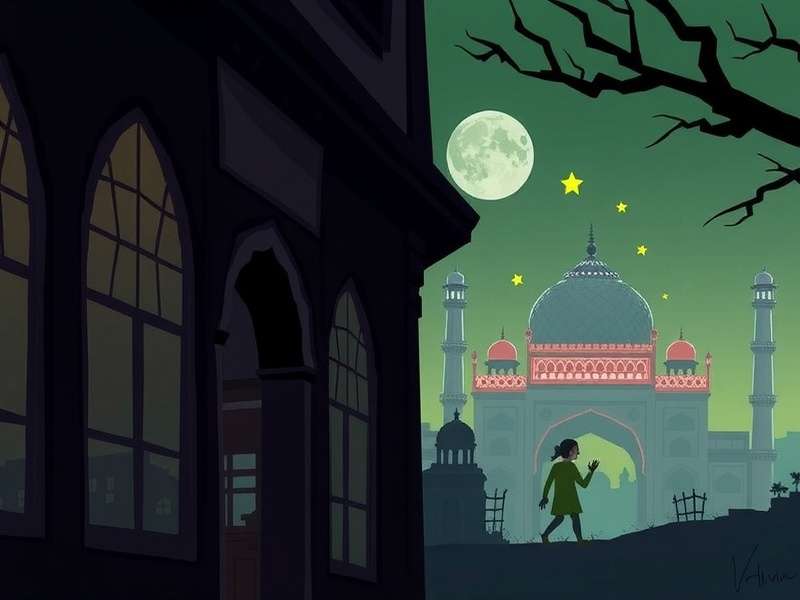
Concept art of Princess Zara’s spirit, a central figure in Creepy Dwelling Delhi’s storyline 👑👻
Setup: The Missing Friend
The game begins with Riya Mehra, a 28-year-old journalist working for Delhi Post, a local newspaper. Riya is known for her fearless reporting—she’s covered everything from political scandals to slum demolitions—but her latest assignment hits close to home: her childhood friend Aisha has gone missing. Aisha, a PhD student researching Mughal-era history at Delhi University, was last seen in Chandni Chowk, where she was investigating a legend about a cursed princess.
Riya receives a call from Aisha’s mother, Mrs. Khan, who is distraught. “The police say she’s a runaway, but I know something’s wrong,” Mrs. Khan tells Riya. “Aisha would never leave without telling me. She was so excited about her research—she said she’d found something big.” Riya, who grew up with Aisha in a chawl in East Delhi, decides to put her journalistic skills to use and investigate Aisha’s disappearance on her own.
Riya travels to Chandni Chowk, armed with her notebook, camera, and a flashlight. Her first stop is Chacha Ram’s shop, a small general store that’s been in the same location for 40 years. Chacha Ram, who knew Riya and Aisha since they were kids, is a wealth of information about Old Delhi’s secrets. “Aisha came here a week ago, asking about Princess Zara,” Chacha Ram tells Riya. “She said she’d found a necklace that belonged to the princess— a locket with a blue gem. I told her to leave it alone, but she wouldn’t listen. Old Delhi’s ghosts don’t like being disturbed, beta.”
Chacha Ram explains the legend of Princess Zara: In the 17th century, Zara was the daughter of Mughal Emperor Shah Jahan and a Hindu noblewoman. She fell in love with a commoner, a weaver named Karim, which enraged Shah Jahan. The emperor hired a tantrik named Raghav to curse Zara, ensuring she could never marry outside the royal family. But the tantrik betrayed Shah Jahan, using the curse to bind Zara’s spirit to a necklace. The tantrik planned to use Zara’s spirit to gain power, but he was killed by the emperor’s soldiers before he could do so. The necklace was lost, and Zara’s spirit has haunted Chandni Chowk ever since, searching for someone to free her.
Chacha Ram tells Riya that Aisha found the necklace in a hidden chamber beneath Jama Masjid. Soon after, a modern-day tantrik—also named Raghav—began following Aisha. Raghav claims to be the descendant of the original tantrik, and he wants to use Zara’s spirit to become immortal. “Aisha knew too much,” Chacha Ram warns Riya. “Raghav won’t let her live if she stands in his way.”
Act 1: The Chawls of Chandni Chowk
Riya’s search begins in Chandni Chowk’s chawls, where Aisha was last seen. The chawls are a maze of narrow staircases, small rooms, and shared courtyards—perfect for hiding secrets (and spirits). As Riya explores, she encounters her first spirit: a small child ghost named Munna, who died in a fire in the chawl 50 years ago. Munna doesn’t speak, but he leads Riya to a hidden puja room, where she finds Aisha’s notebook.
Aisha’s notebook is filled with notes about Princess Zara’s curse and Raghav’s plan. Aisha writes that the curse can only be broken by someone with a connection to both Zara and Karim—the commoner she loved. Aisha also notes that Raghav needs a “sacrifice” to unlock the necklace’s full power: someone who loves something more than life itself. Aisha fears that Raghav plans to use her as the sacrifice, since she loves her research more than anything else.
The notebook also includes a map of Old Delhi, marking three key locations: Jama Masjid (where the necklace was found), Red Fort (where Raghav is hiding), and a hidden temple on the outskirts of Chandni Chowk (where a holy man can help break the curse). Riya decides to visit Jama Masjid first, hoping to find clues about Aisha’s whereabouts.
On her way to Jama Masjid, Riya is pursued by Raghav’s minions—spirits he has controlled using dark magic. These spirits are tied to Delhi’s past:
- The British Soldier: A spirit of a British soldier who died in the 1857 Indian Rebellion. He wears a red coat and carries a rifle, and he patrols the streets near Red Fort. He is sensitive to loud noises, so Riya must move quietly to avoid him.
- The Street Vendor: A spirit of a golgappa vendor who was murdered for refusing to pay protection money to a local gang. He wanders the streets of Chandni Chowk, calling out “golgappas, pani puri!” He is attracted to food, so Riya can distract him with laddoos.
- The Chawl Widow: A spirit of a woman who died of a broken heart after her husband left her. She haunts the chawls’ staircases, and she cries loudly when she’s near. She is repelled by tulsi leaves, which Riya can find in puja rooms.
Act 2: Jama Masjid & the Hidden Chamber
Riya reaches Jama Masjid, one of Delhi’s most iconic landmarks. The mosque’s grand courtyard and towering minarets are a stark contrast to the crowded chawls of Chandni Chowk, but Riya knows that danger lurks within. Using Aisha’s notebook as a guide, she finds a hidden entrance to a chamber beneath the mosque—once used by Mughal nobles to escape during attacks.
Inside the chamber, Riya finds Aisha’s camera, which has photos of the necklace and Raghav performing a ritual. The necklace is a silver